

Iran Academia, as an independent academic institution committed to human rights principles, academic freedom, the right to education, and free access to information, is following the current developments in Iran with deep concern.
According to numerous and harrowing reports and testimonies, government forces in recent weeks have carried out an unprecedented and bloody crackdown on protesters—one that, based on available evidence, has resulted in the killing of thousands and represents one of the most severe violations of the right to life in Iran’s contemporary history.
Alongside this widespread killing, thousands have been arrested, giving rise to profound concern for their fate. This concern has intensified in light of explicit statements by officials of the Islamic Republic’s judiciary regarding the attribution of the charge of “moharebeh” (waging war against God) to protesters—a charge that, under Iran’s domestic laws, can lead to death sentences.
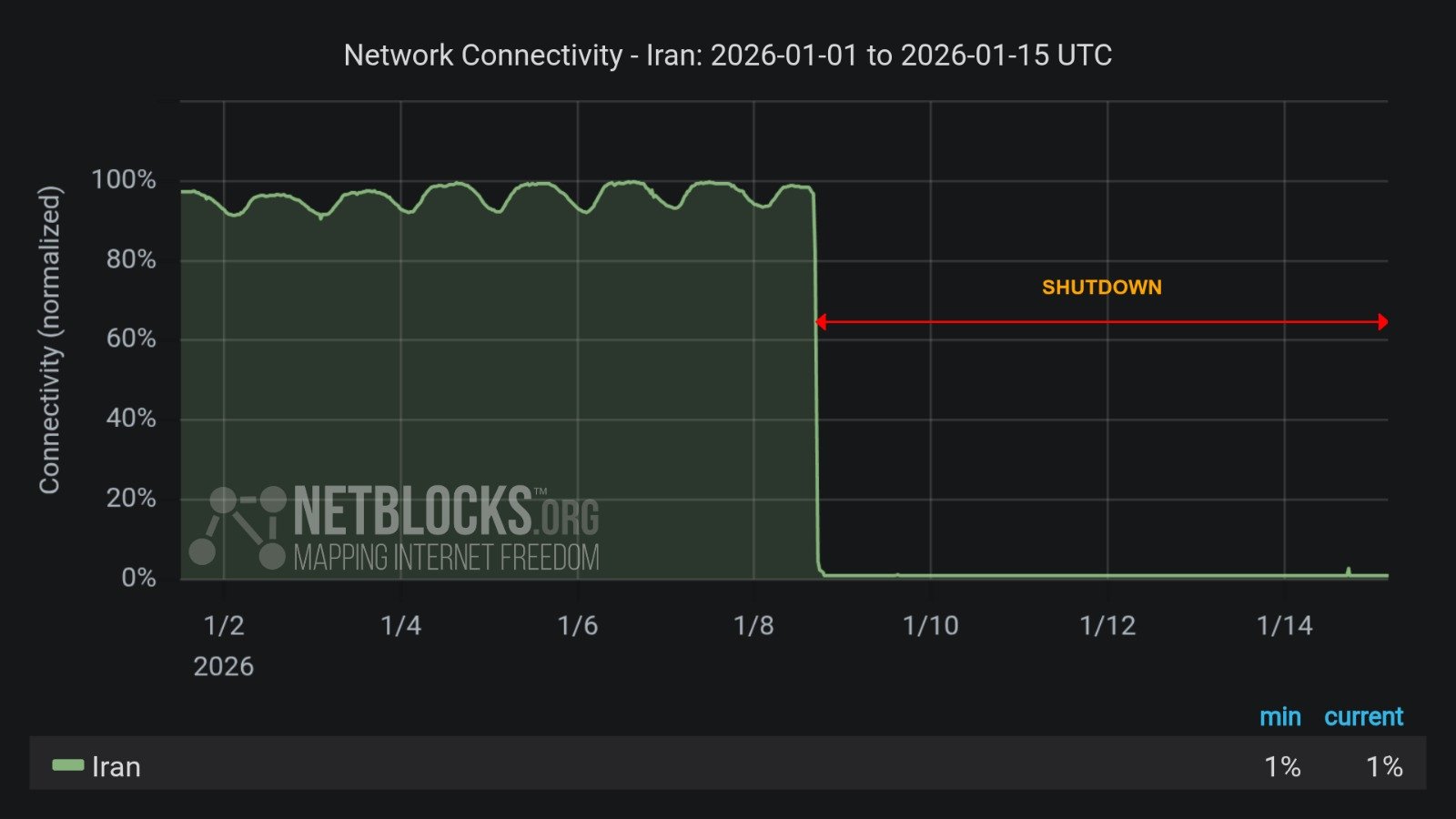
Simultaneously, the Iranian government has imposed the longest, most extensive, and most targeted nationwide internet shutdown, effectively cutting off large segments of society and citizens from the outside world for more than a week. This digital blackout shows no signs of easing or ending; on the contrary, available evidence indicates escalating and increasingly sophisticated restrictions.
At a time when nearly all domestic communications infrastructures have been rendered inoperative, satellite internet—particularly Starlink—has become one of the last remaining, albeit limited and accessible to only a few, channels of connection to the outside world. Reports nevertheless indicate that the Iranian government is actively seeking to identify, disrupt, block, and target satellite internet equipment.
Beyond the digital sphere, alarming reports have emerged of organized actions by government forces to conduct door-to-door searches and confiscate satellite television equipment. Satellite television—especially under conditions of internet shutdown—remains among the few sources through which people can access non-state news and information.
Taken together—from the mass killing of protesters to the comprehensive communications blackout and the elimination of information channels—these measures indicate a deliberate move toward the consolidation of extreme authoritarianism and a pattern of total information isolation akin to the North Korean model. This trajectory stands in complete contradiction to international human rights commitments, fundamental freedoms, and academic freedom.
Iran Academia calls on the global academic community, scholarly institutions, academic associations, and relevant international organizations to take these widespread and systematic violations seriously; to condemn them; to work for the immediate halt to the issuance and implementation of death sentences and for the unconditional release of political prisoners and protest detainees; and to provide effective support for the right to education, free access to information, and the physical security of students and citizens in Iran.
Iran Academia declares its solidarity with students and people who are standing up for the right to life, freedom, and human dignity, and reaffirms its enduring commitment to defending academic freedom and fundamental human rights.
