


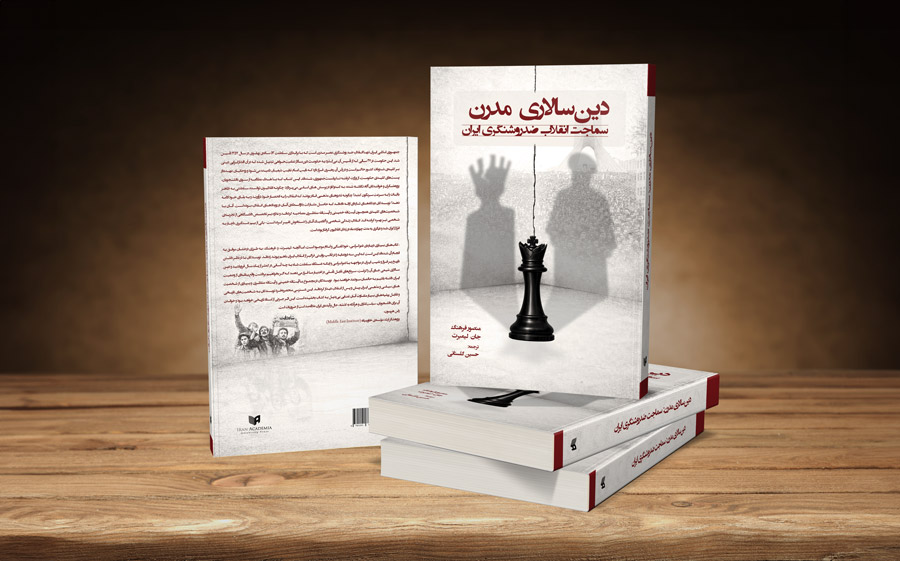
The Islamic Republic of Iran is the only anti-Enlightenment revolution of the modern era, established in 1979 following the overthrow of the 54-year Pahlavi monarchy. Over the 47 years since its founding, it has evolved into a totalitarian theocratic state in which religious authoritarianism permeates all aspects of public and political life. At its apex stands a Supreme Leader, regarded as the deputy of the Hidden Imam in Shi‘i belief, while clerics occupy key positions throughout the government, from ministerial offices to the presidency.
Written for students, scholars, and informed readers, this book explores a set of fundamental questions: How did revolutionaries succeed in rapidly toppling a seemingly stable monarchy? How were religious hardliners able to monopolize the revolution and sustain their dominance? The authors offer fresh perspectives grounded in their direct participation in the events of the revolution. They conducted interviews with key figures such as Ayatollah Khomeini and Ayatollah Montazeri and draw not only on academic expertise but also on personal experience. The revolution profoundly shaped both their personal and academic lives—one was forced to flee Iran to avoid arrest, while the other endured fourteen months in captivity under revolutionary authorities.
************************************
There are plenty of books on democracy, on autocracy and on Islam, but what Limbert and Farhang do brilliantly is tie the three themes together in a sweeping account of the Iranian Revolution. The book comes at a propitious time. Iran over the next several years will likely experience a succession of leadership when Supreme Leader Ali Khamenei leaves the scene. The authors give us something to consider about what we realistically can expect given Iran’s troubled history with democracy and how easily the Shah’s apparatus could be dismantled in less than a year and replaced with a Shi’i theocracy. Both authors played roles in the post-revolutionary context of Iran: one as an Iranian diplomat and the other an American diplomat in Iran who was held for more than a year during the hostage crisis. . Taken together, they met Ayatollahs Khomeini and Khamenei, and plenty of other pre-and post-revolutionary Iranian political and religious figures. This unique access to historical figures and the dialectic of their two very different backgrounds adds an unparalleled richness to the book. It will be part of the historical record and is essential reading for students, policymakers and anyone interested in the past present and future of Iran
Ross Harrison, Senior Fellow at the Middle East Institute.
Ross Harrison
Senior Fellow at Middle East Institute