


Abstract
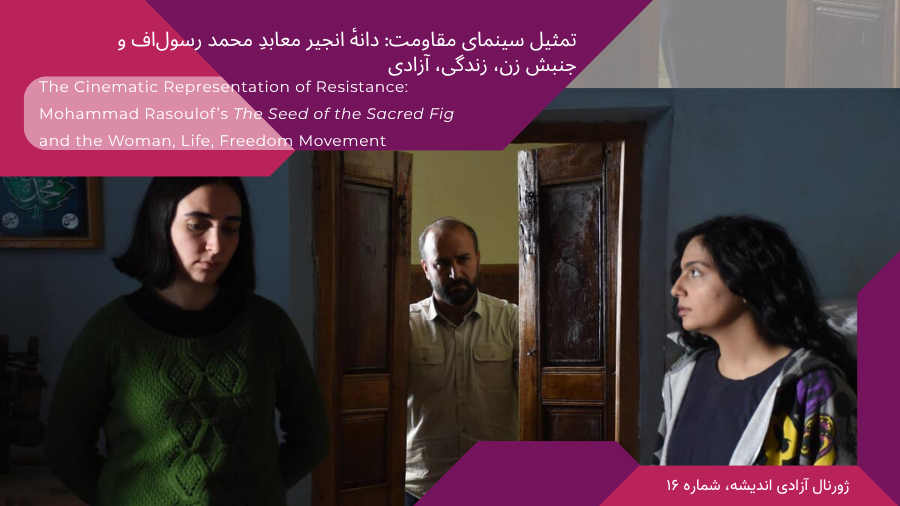
This article examines the social and cinematic reflections of the Woman, Life, Freedom movement in the context of Mohammad Rasoulof’s film The Seed of the Sacred Fig (Dâne-ye anjîr-e ma’âbed). The film strikingly portrays the authoritarian regime’s oppression of individuals in Iran, gender inequality, and practices of resistance. In 2022, the death of Jina Mahsa Amini after being detained by the morality police sparked mass protests in Iran and amplified feminist resistance on a global scale.
This study analyzes the intersections between Rasoulof’s film and this movement, offering a critical framework for understanding processes of social transformation. Employing the method of critical discourse analysis, the article evaluates the film’s narrative structure, the forms of resistance embodied by its characters, and the cinematic representation of power mechanisms through the lenses of feminist film theory and postcolonial perspectives. The impact of the Woman, Life, Freedom movement on social change in Iran is examined in relation to the film’s visual and narrative elements. In this context, the article aims to critically discuss the interaction between cinema and social movements.
Keywords
Iranian Cinema, Woman Life Freedom Movement, Mohammad Rasoulof, Social Resistance and Cinema
