


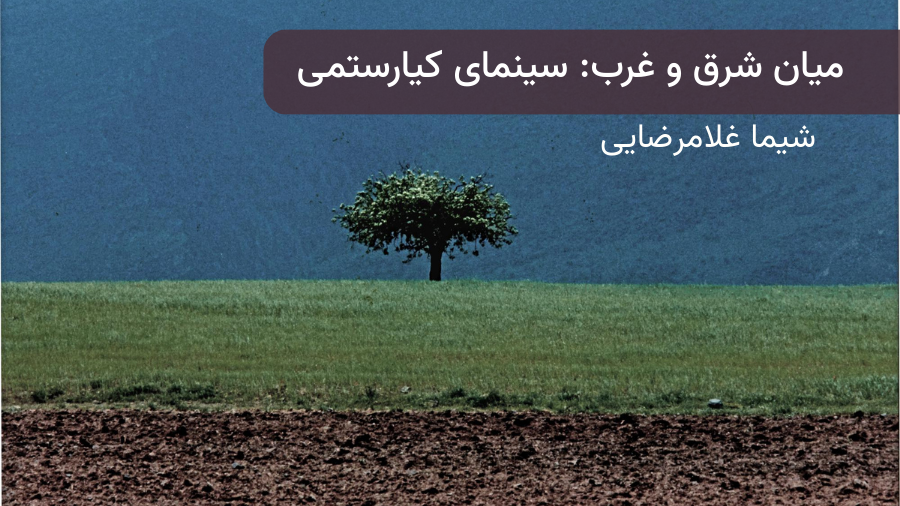
The essay “Cloud: Between Paris and Tehran,” by Joan Copjec, offers a novel analysis of the films of Abbas Kiarostami. The book connects Kiarostami’s minimalist style with Lacanian psychoanalysis and Islamic philosophy, particularly the ideas of Henry Corbin.
Copjec argues that the cinematic image in Kiarostami’s work functions as a “witness to absence,” a concept that bridges Lacan’s notion of the Real and Corbin’s imaginal world. This approach helps explain the filmmaker’s deliberate use of ambiguity, open endings, and resistance to linear storytelling, which invites active participation from the viewer.
The article further explores how the concept of the “name of the father” in Lacanian theory is challenged and reconfigured within Islamic culture, where a “genealogical desert” exists between God and humanity. This idea is linked to Kiarostami’s films, suggesting that his work navigates a space where the “father function” is mediated not by a paternal figure, but by a higher symbolic order, such as the divine word or the figure of the Imam in Shia Islam.
Ultimately, the article concludes that Copjec’s reading of Kiarostami is not a form of cultural essentialism but a progressive effort to break down the false binary between East and West, showing how concepts from different intellectual traditions can engage in a productive dialogue.
To read the original article in Farsi, please change the language of this page to Persian.
