


Constitutional Design, the Limitation of Power, and Transitional Justice on the Road to Democracy
The Architecture of Transition is a four-part educational package from the third season of the Iran Academia Podcast. It addresses one of the most fundamental questions about Iran’s political future: how should a democratic transition be designed so that it does not remain a mere transfer of power, but instead prevents the reproduction of authoritarianism, the concentration of power, political exclusion, and renewed violence?
This series approaches transition not simply as a political moment, but as a legal, institutional, social, and historical process. The central question is not only who gains power, but how power is limited, made accountable, bound by fundamental rights, and placed under the supervision of independent institutions.
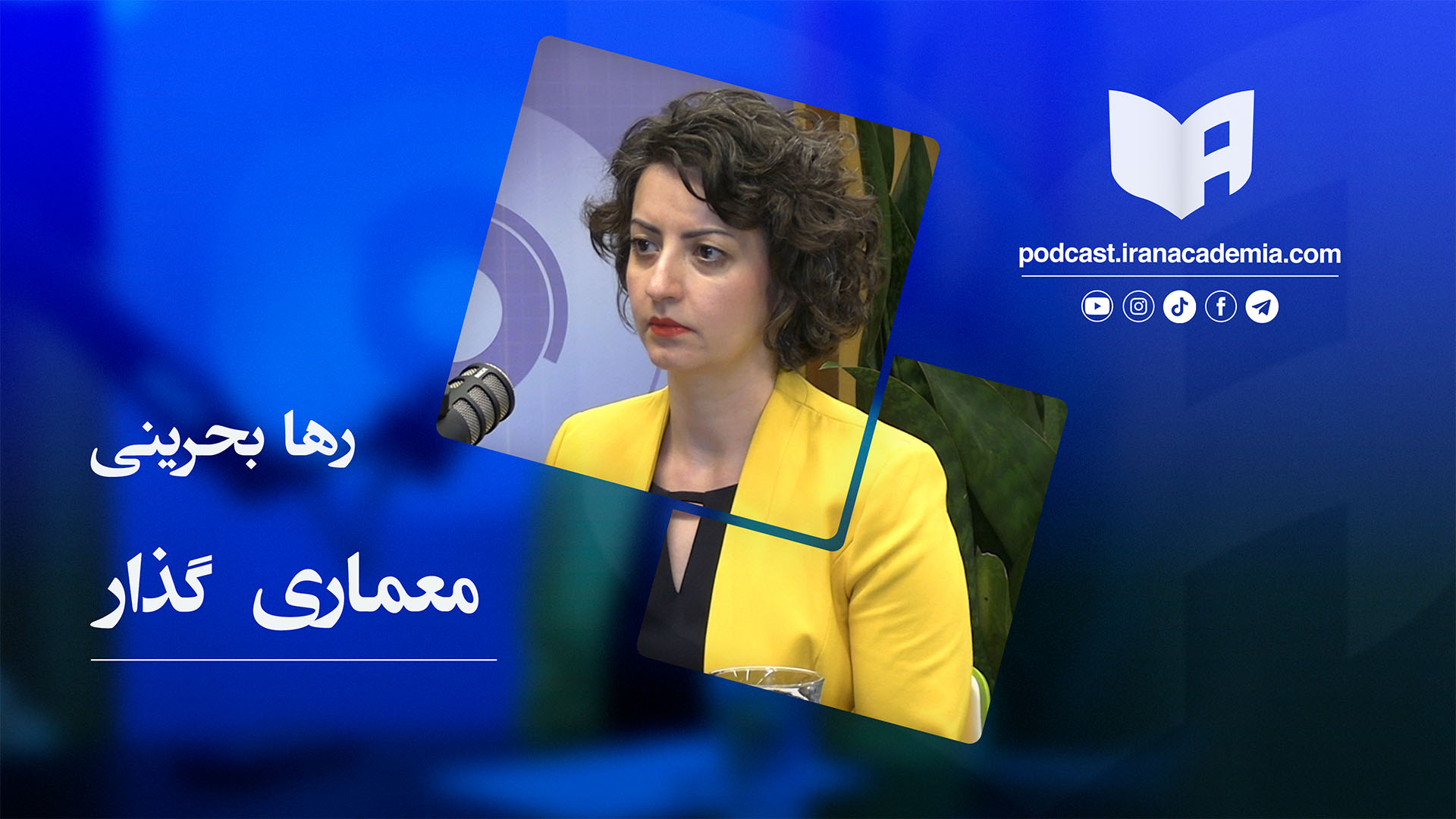
The first three parts of the series feature an in-depth conversation with Raha Bahreini, a lawyer and human rights researcher, who joins the program in her personal capacity. The discussions focus on constitutional transition, interim rules, constituent assemblies, legitimacy, limits on power, historical experiences of transition, and the relationship between constitutional design and transitional justice.
The fourth part brings together five short expert videos, each addressing a key issue related to transition, transitional justice, accountability, truth-seeking, guarantees of non-repetition, the people, the law, and justice on the road ahead.
Parts of This Educational Package
Part One
Rules of the Game Before the Winner Is Chosen
Where Does Democratic Transition Begin?
The first part asks how democratic transition differs from mere regime change. The conversation begins with the question of why the fundamental rules of the game must be defined before the political winner is chosen: fundamental rights, limits on power, the security of political losers, the legitimacy of interim institutions, and a framework that prevents the majority, revolution, the people, or political emergency from becoming excuses for bypassing law and rights.
Part Two
The Bridge Between Two Orders
Lessons for the Institutional Design of Transition
The second part examines transition as a bridge between the old order and the new one. It discusses historical experiences of transition, with particular attention to South Africa: a case in which interim rules, binding principles, elections, a constituent assembly, a constitutional court, and a government of national unity together formed part of the architecture of transition.
The central question of this part is how a society can move beyond the lawlessness of collapse without allowing the new power, from the very beginning, to concentrate authority, exclude opponents, or reproduce authoritarian rule.
Part Three
Justice, Truth, and the Guarantee of Non-Repetition
Preventing Authoritarian Restoration
The third part turns to transitional justice: what should be done with the past? How should a society deal with victims, perpetrators, truth, memory, torture, executions, repression, discrimination, confiscation, exile, and institutional harm?
In this part, transitional justice is not understood merely as trial or punishment, but as part of the design of the future. Truth-seeking, accountability, the reconstruction of judicial and security institutions, guarantees of non-repetition, and the recognition of victims are all treated as part of the broader question of constitutional design and the limitation of power.
Part Four
Who Owns the Transition?
The People, the Law, and Justice on the Road Ahead
The fourth part connects the main conversation to several short and focused interventions. It brings together five expert videos, each addressing one of the key dimensions of transition: the role of the people, the place of law, justice, accountability, fundamental rights, and society’s relationship to its political future.
The central question of this part is who owns the transition, and how it can be prevented from becoming a project of power acquisition by a limited group. A democratic transition is meaningful only when the people are not merely the object of change, but the owners of the process, the monitors of power, and the primary stakeholders of justice.
Main Questions of the Course
This educational package addresses the following questions:
What is the difference between democratic transition and regime change?
What is the difference between constitutionalism and merely having a constitution?
How are interim rules formed during transition?
Where does a constituent assembly derive its legitimacy from, and what limits should it have?
Can a majority restrict fundamental rights?
How can elected power itself be bound by fundamental principles?
How does transitional justice connect to guarantees of non-repetition and the prevention of authoritarian restoration?
What is the role of the people, civil institutions, lawyers, victims, and political society in the architecture of transition?
Why “The Architecture of Transition”?
Speaking about transition in a moment of crisis may seem abstract or premature. Yet it is precisely in moments of crisis that the question of architecture becomes essential. If rules, institutions, limits on power, fundamental rights, and transitional justice are not discussed in advance, transition may end up reproducing the very logic of power it was meant to overcome.
The architecture of transition means designing the minimum institutional foundations required to ensure that new power does not become lawless, unlimited, and unaccountable from the very beginning. It means that before choosing the winner, there must be agreement on the security of the loser, the dignity of the victim, the rights of the citizen, the independence of institutions, the limitation of power, and mechanisms of accountability.
This series is an attempt to build a more precise language for thinking about the future: a language based neither on naïve hope nor on paralyzing pessimism. Its central concern is institutional responsibility: how can we imagine a future in which not only the name of power has changed, but also its logic?
Production and Publication
This series is published as part of the third season of the Iran Academia Podcast and is also available as an educational playlist on Iran Academia’s YouTube channel. Its audio and video versions have also been published on podcast platforms, including Spotify.
Acknowledgement
This conversation was recorded in The Hague on May 22 and 23.
This conversation was recorded in The Hague at The Hague Humanity Hub, which provides space for connection, dialogue, and collaboration within the peace and justice community.
Acknowledgement:
The recording took place at The Hague Humanity Hub, a space for connection, dialogue, and collaboration within the peace and justice community.
The Hague Humanity Hub
Fluwelen Burgwal 58, 2511 CJ, The Hague, Netherlands
Instagram: @humanityhub