


Abstract
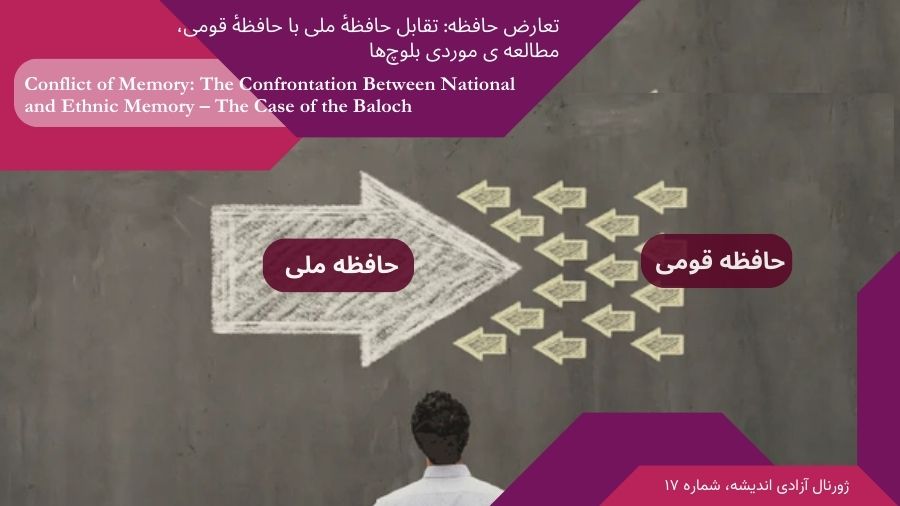
Focusing on the Baloch experience in Iran, this article examines the tension between the state-constructed national memory and the Baloch ethnic memory. The discourse of Iranianness, from the time of the Constitution to the present day, has been shaped by nationalist intellectuals and ideological institutions, such as formal education and national historiography, into a centralized and unified identity. This national memory, relying on pre-Islamic myths, Shahnameh history, and Shiite identity, has led to the elimination or marginalization of alternative ethnic memories.
In response, the Baloch have built a resistance memory and an independent identity, drawing on their tribal life, experiences of exclusion and oppression, and local narratives. Drawing on the perspectives of Benedict Anderson, Gramsci, and Edward Said, the study shows how national memory in Iran has fueled ethnic and religious “otherization,” and how Baloch memory has become a platform for cultural resistance and identity redefinition.